Graphic Recording Today
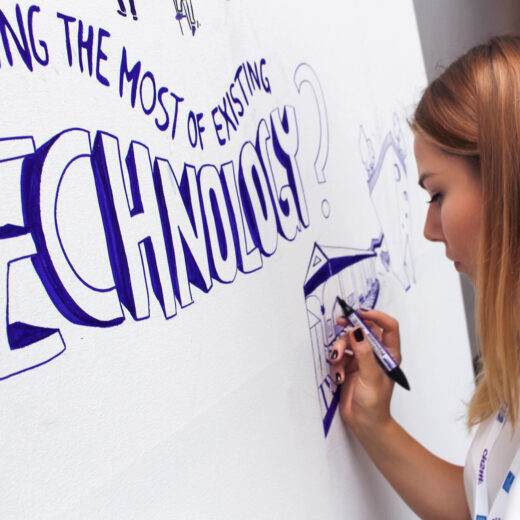
Graphic recording, or live scribing, has become one of the most effective ways to capture ideas in real time. Once used mainly at workshops and innovation sessions, the practice has expanded into digital events, hybrid meetings, and strategic communication projects. Today the field is evolving quickly as businesses search for clearer, faster, and more engaging ways to communicate.
The terminology is varied. Some call it Live Scribing, Sketch Noting, Graphic Harvesting, or Live Illustration. Regardless of the label, the purpose remains the same: turning spoken information into visual content that is easier to understand and remember.
Understand how Graphic Recording works.
Why Graphic Recording Matters Today
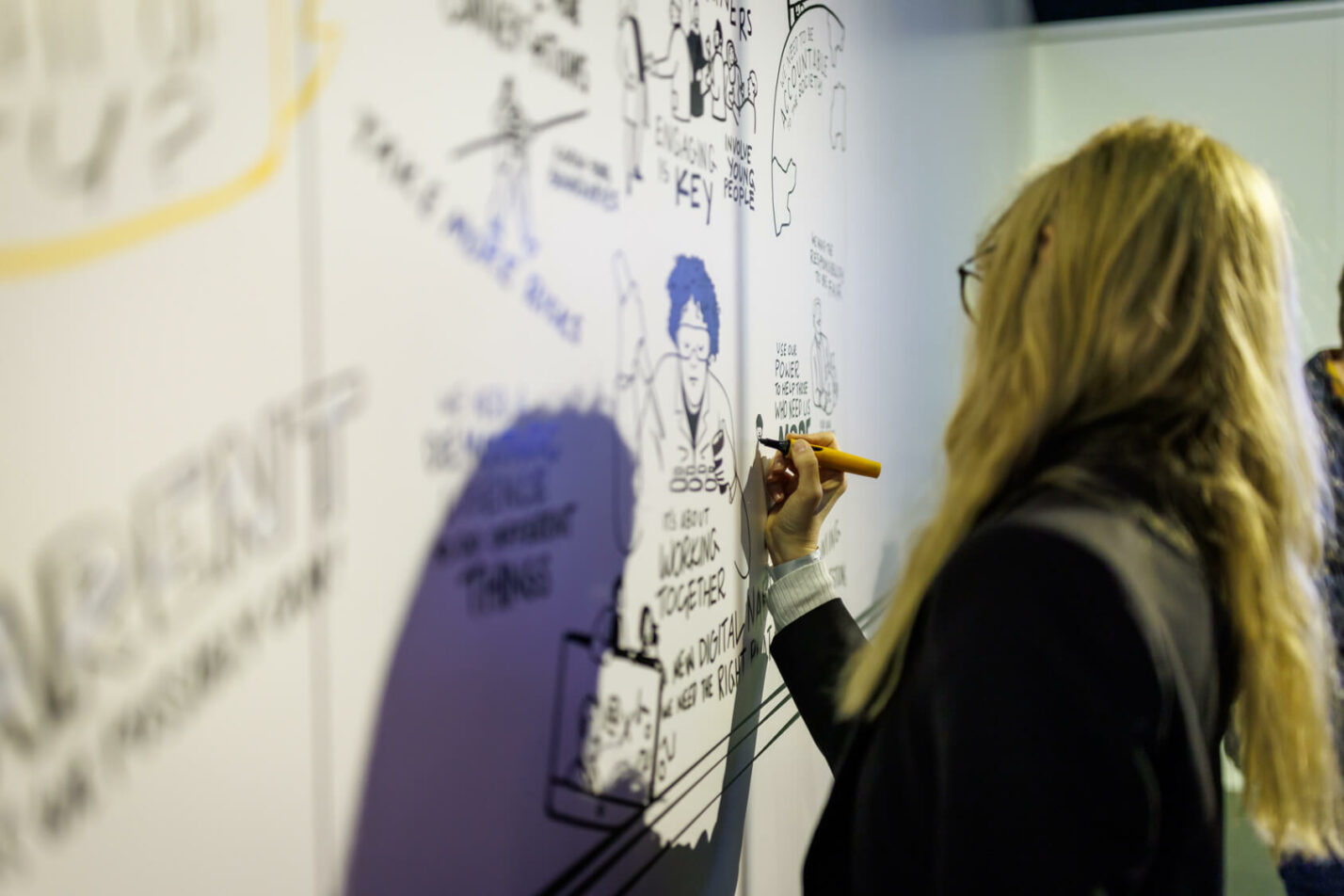
Teams everywhere deal with information overload. People tune out quickly, attention spans are shorter, and traditional note taking is often ineffective. Graphic recording helps solve this challenge by simplifying messages and making content more memorable.
Our clients use visual recording for product development, pitch preparation, strategy creation, and company vision work. Visual storytelling shows connections between ideas and turns complex conversations into clarity.
The demand for experienced graphic recorders has grown because businesses need people who can listen deeply, synthesise quickly, and illustrate ideas in a way that audiences can immediately understand.
Trend 1: Location-Based Graphic Recording Is Becoming More Interactive
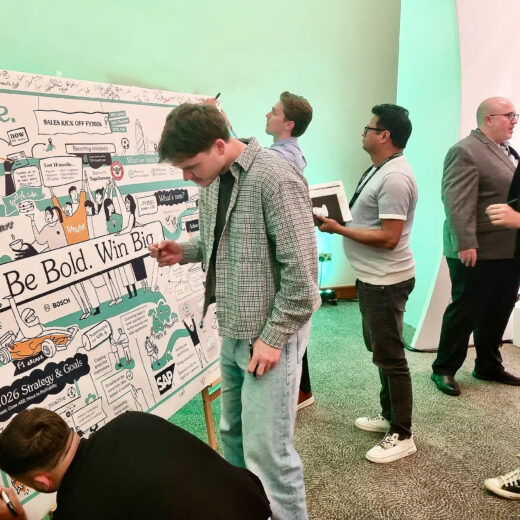
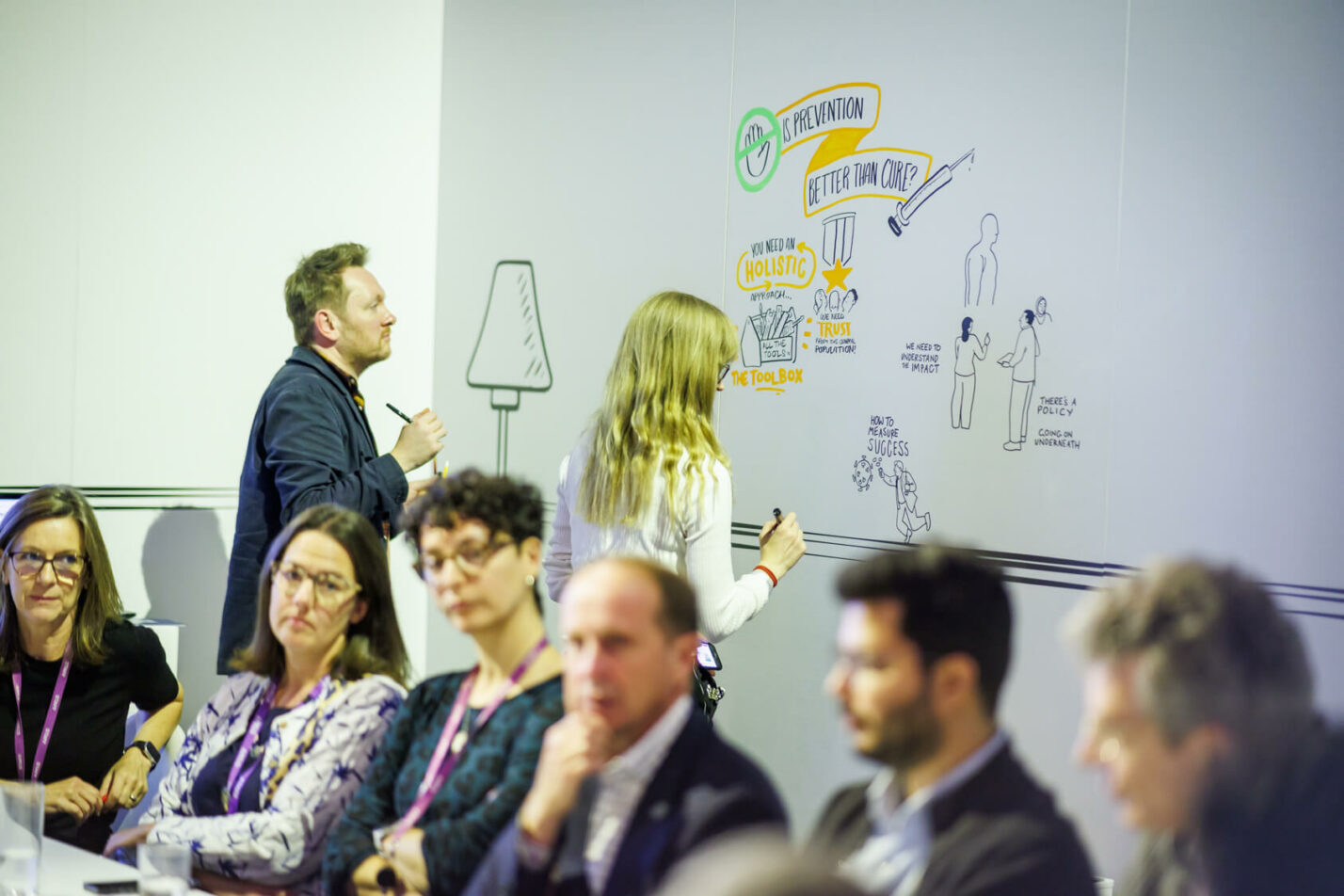
In-person graphic recording remains popular because real-time interaction adds intimacy and energy to the process. Participants can watch the illustration unfold, follow the flow of ideas, and even contribute insights that shape the visual story.
This level of engagement increases buy-in and creates a shared artefact the team can use long after the session ends.
A recent example from a Google Germany workshop shows how powerful this can be.
“Lina and Kristina visualised the contents of our two-day workshop and were a delight to work with. I highly recommend them.”
— Justus Bender, Project Manager, Google Germany
Trend 2: Remote and Virtual Graphic Recording Is Rapidly Growing
Remote graphic recording has become essential for online and hybrid events. Businesses now collaborate across continents, and teams meet on platforms like Zoom, Google Meet, and Microsoft Teams.
The shift to digital communication has increased demand for virtual visualisation. It allows teams to:
- capture discussions without being in the same location
- visualise strategy documents in real time
- iterate and refine concepts quickly
- access final visuals immediately after the event
Our team now supports leadership meetings, offsites, roundtables, and client workshops online. Technology has sped up both the creation and delivery of visuals, which is why remote recording has become one of the most requested services.
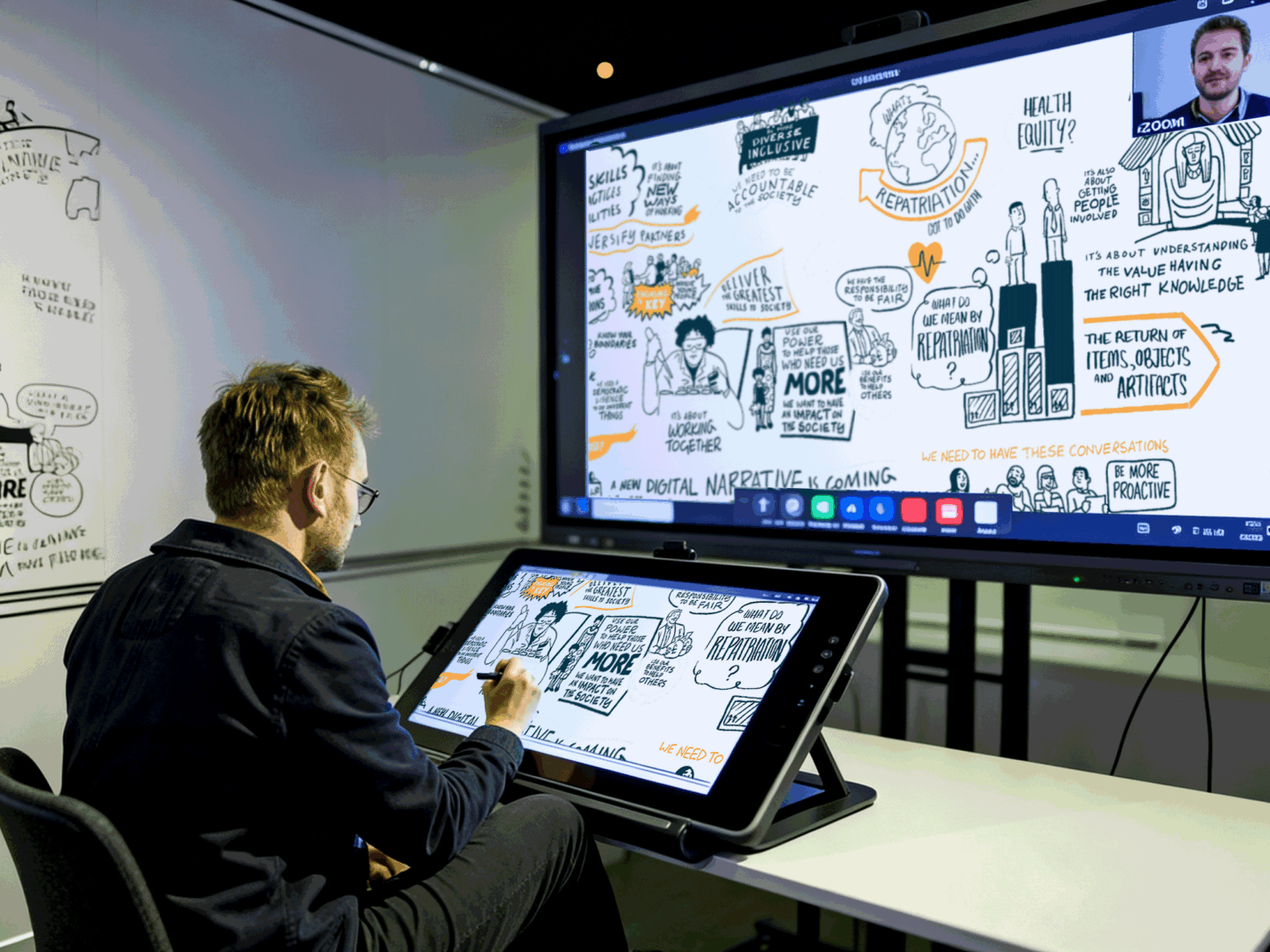
Trend 3: Digital Tools Are Expanding the Possibilities
Graphic recorders today use tablets, styluses, and professional drawing software to speed up production and enhance detail. Digital tools allow:
- quicker editing
- immediate export in multiple formats
- easier sharing across teams
- integration with presentations, pitches, and strategy documents
This shift pairs perfectly with your In-Person (hand-drawn) vs Digital content cluster and reinforces Smartup Visuals as a studio fluent in both styles. See project examples.
Trend 4: Graphic Recorders Are Now Strategy Partners
The role of a graphic recorder has evolved. It is no longer limited to drawing on a wall or tablet during events. Many companies now involve visual practitioners earlier in the process to:
- refine messaging
- capture insights for research
- build visual frameworks
- shape the narrative for pitches or innovation projects
Businesses rely on visual communication to help teams align and overcome internal communication gaps. Visual recording is becoming a strategic tool, not just an artistic service.
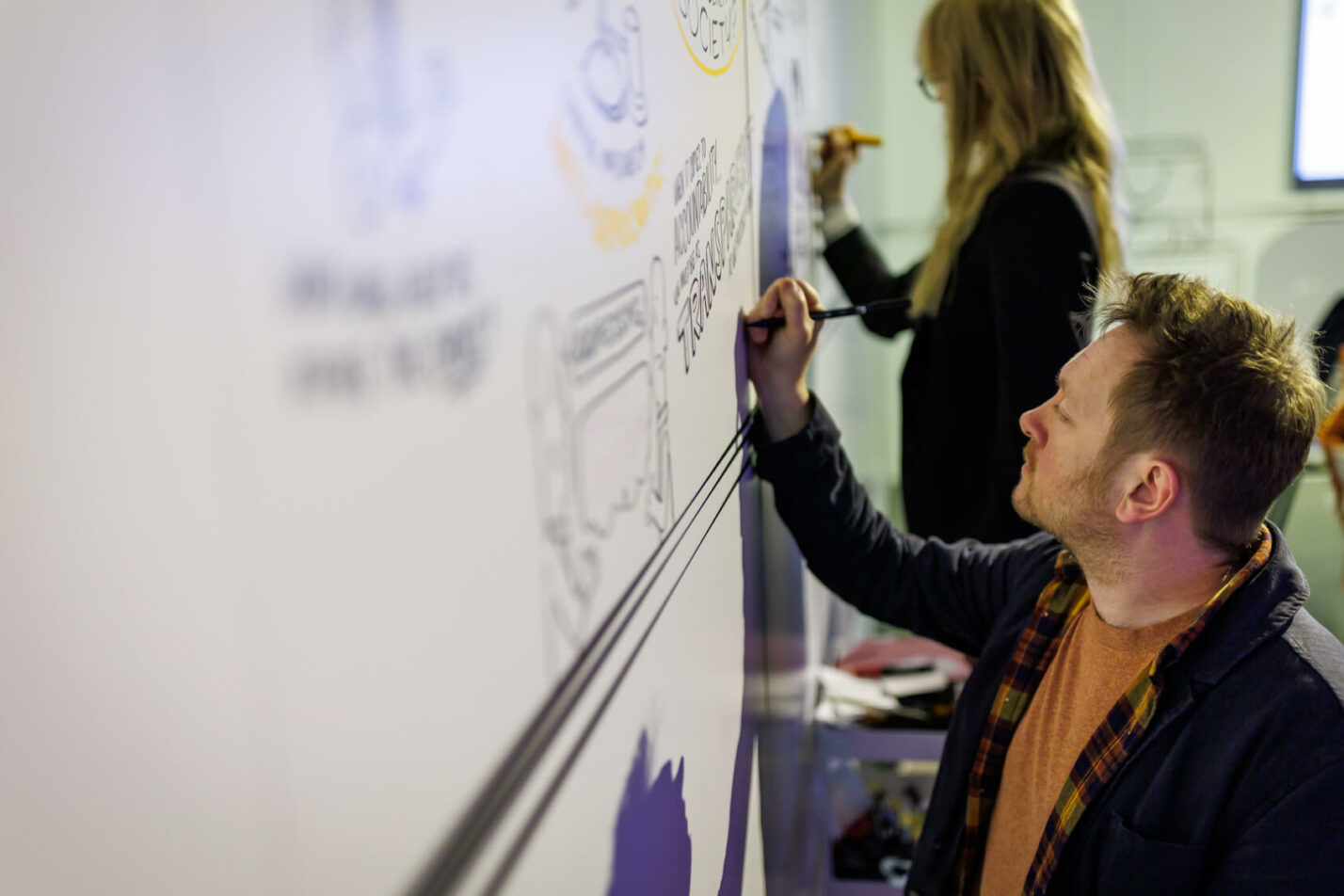
What Graphic Recorders Do Today
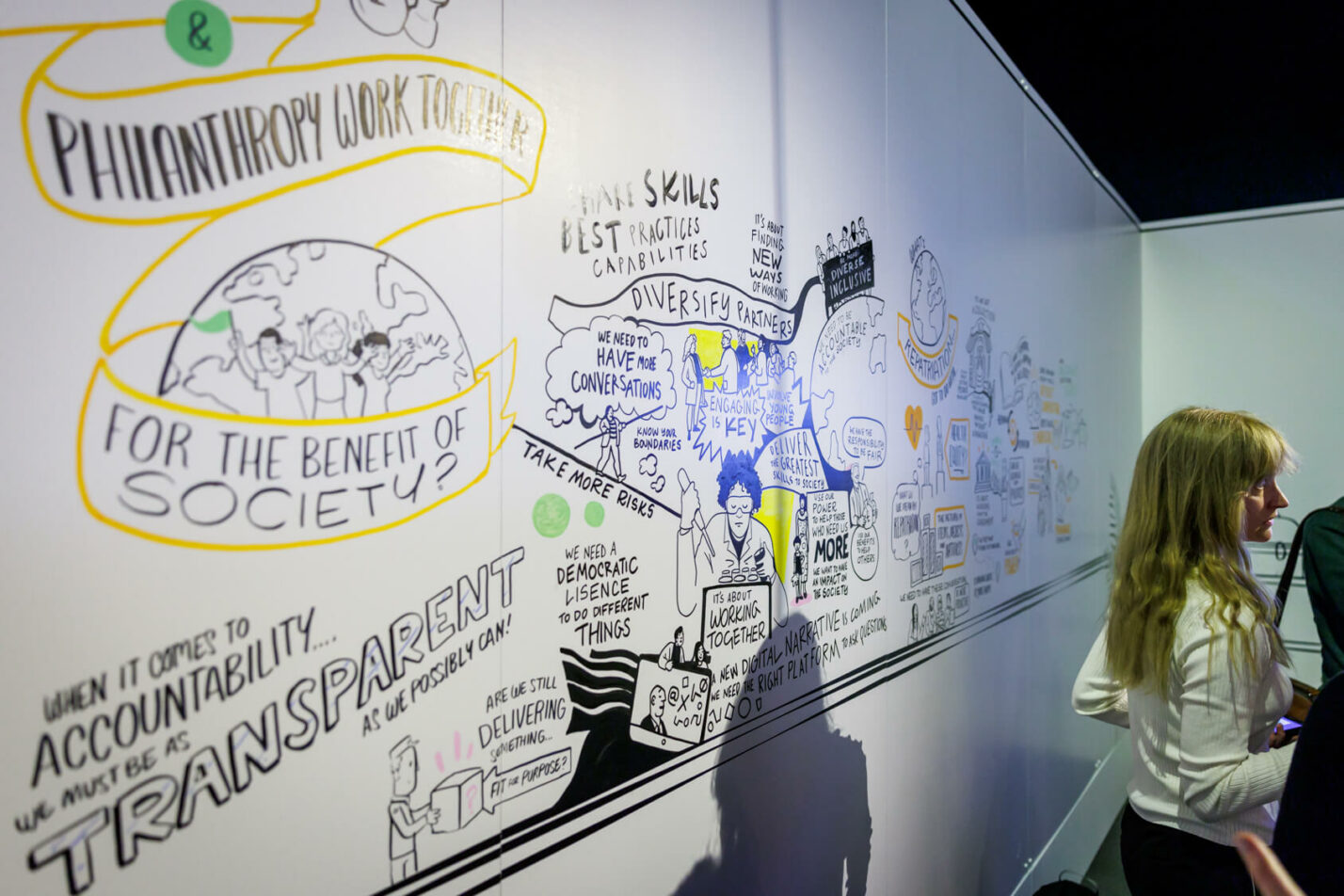
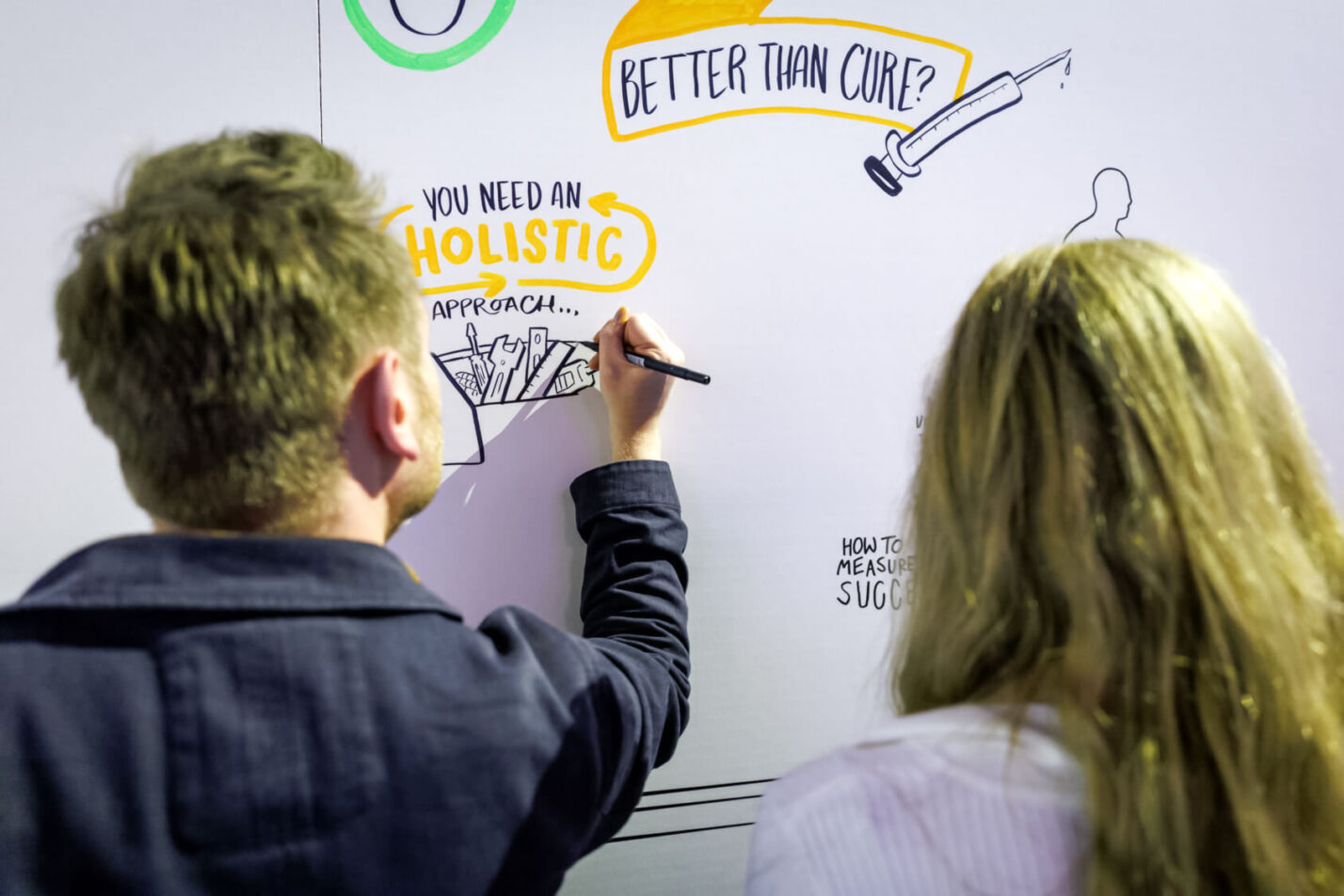
Graphic recorders transform discussions, presentations, and workshops into visual summaries that teams can use immediately. The visuals help companies communicate with internal and external audiences and make complex content easier to understand.
Whether created in person or remotely, these visuals become powerful infographics, learning tools, and communication assets.
Is Graphic Recording the Same as Live Scribing
Yes. Live Scribing, Graphic Recording, Sketch Noting, and Visual Harvesting all refer to the same practice. The difference is mostly geographical. Live Scribing is common in the United Kingdom, while Graphic Recording is widely used in the United States and across Europe.
If you want clarity on which style works best, you can read our guide on visual formats for events or contact our team for advice.
Learn more about Live Scribing.
How Much Does Graphic Recording Cost Today
Pricing varies based on event length, preparation needs, and the experience level of the graphic recorder. In Europe and the United Kingdom, daily rates generally range between 1000 and 2700 euros. Longer sessions, multi-day events, and custom deliverables influence the final price.
Our team includes senior and junior visual practitioners who speak multiple languages and can work with different formats and budgets. We guide clients through the process and provide clear proposals tailored to their needs.
If you would like to discuss your event or explore options for graphic recording, feel free to reach out to us.