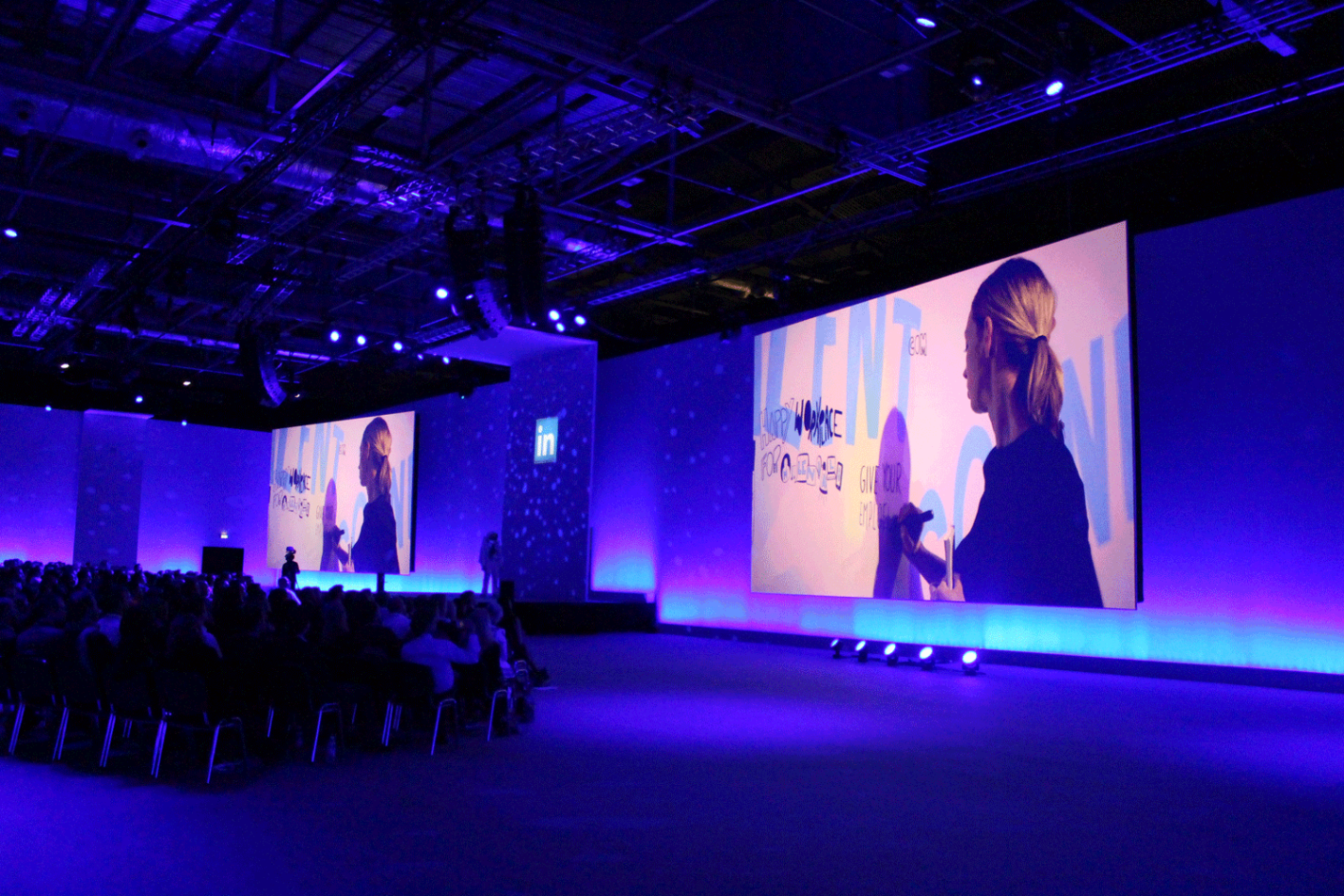
Graphic recorders capture key ideas and conversations at events visually in real time, transforming complex discussions into clear visual summaries. At conferences, workshops, and strategy sessions, graphic recording helps audiences understand ideas faster, stay engaged, and remember the insights that matter most.
By translating spoken conversations into structured visuals, graphic recorders make it easier for participants to follow discussions, connect ideas, and retain information long after the event has finished.
What Do Graphic Recorders Do at Events
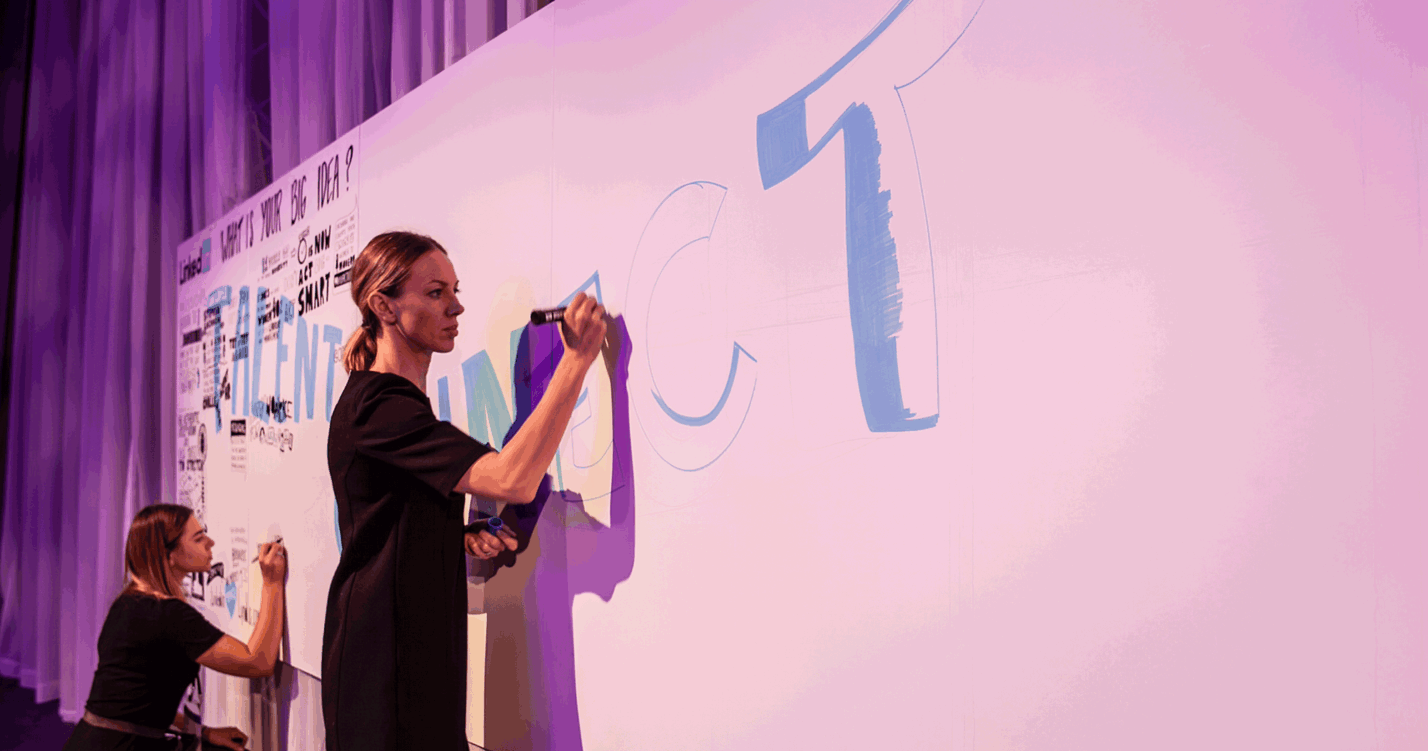
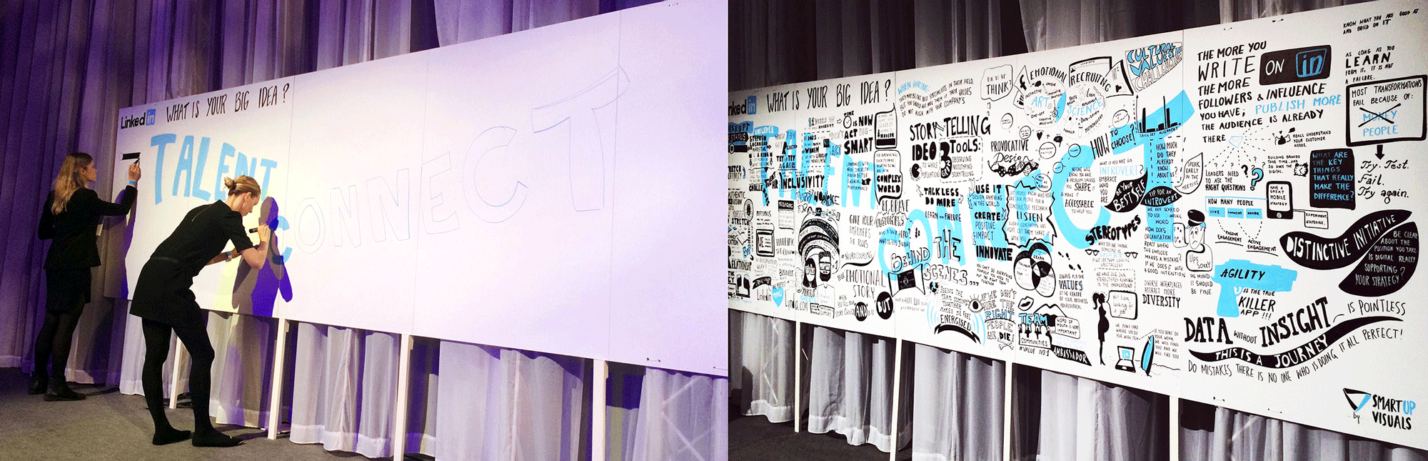
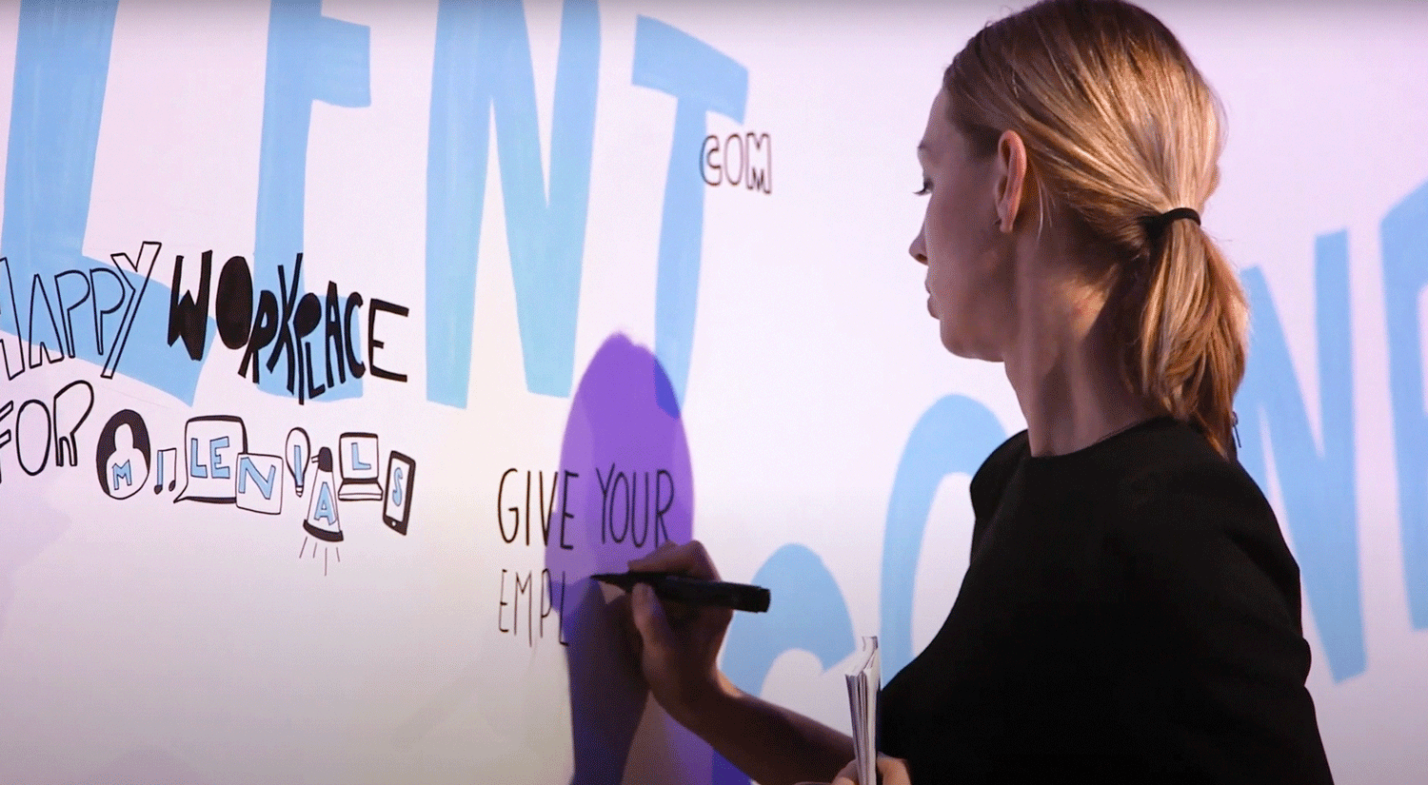
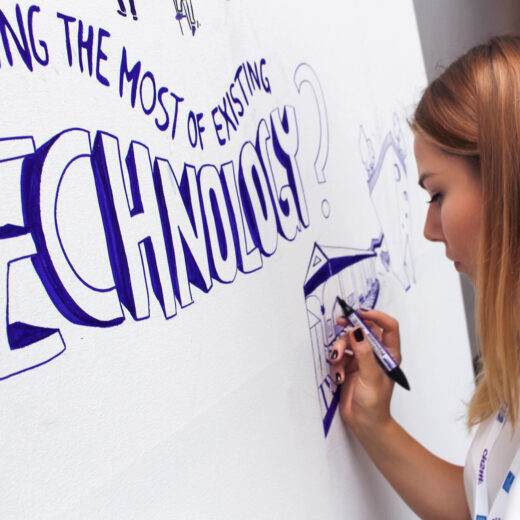
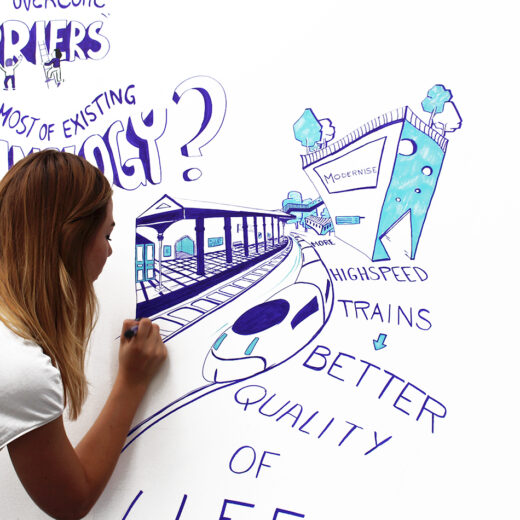
A graphic recorder listens carefully to presentations, panel discussions, or group conversations and translates the key messages into a large visual summary as the event unfolds.
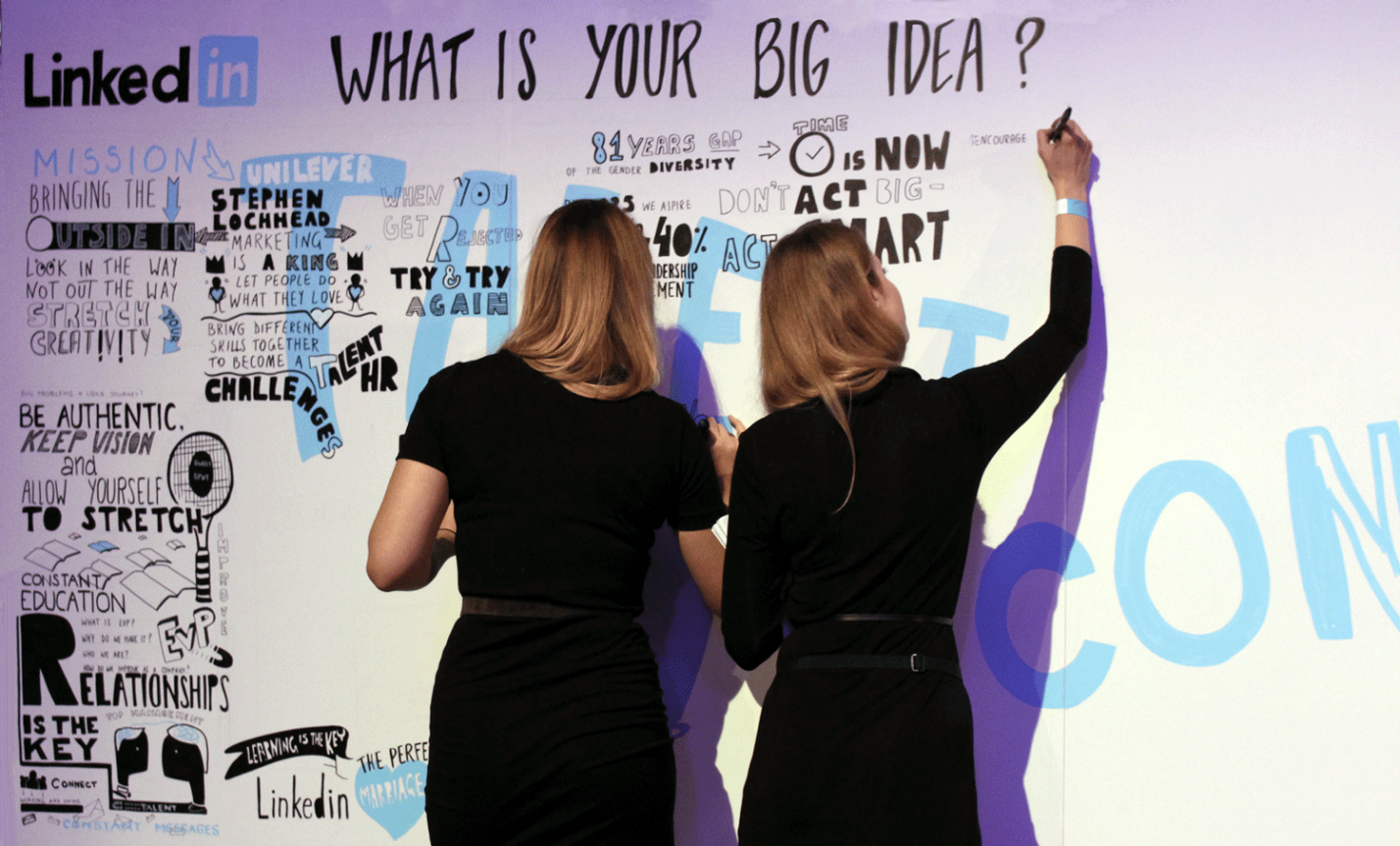
Using a combination of words, icons, diagrams, and illustrations, they capture:
• Key ideas
• Themes and patterns
• Important quotes
• Connections between concepts
The result is a visual record that allows participants to see the conversation develop in real time.
Graphic recording is often referred to as live scribing and this is the term we mostly use in the UK.
Many business conversations involve complex language, strategy discussions, or technical information. Visuals help simplify these messages so people can absorb them more easily.
2. It increases engagement at events
When participants see ideas come to life visually, they stay focused longer. Real time illustration encourages curiosity and keeps energy high throughout the session.
3. It reduces misunderstandings
Visual notes show the relationships between ideas, making it easier for teams to follow the logic of a discussion. This reduces confusion and supports better decision making.
4. It improves information retention
Studies show that people remember visual information much more effectively than text alone. Teams leave with a shared visual summary they can refer back to after the event.
5. It creates communication assets
The final visual can be used in presentations, internal newsletters, reports, training sessions, pitches, or social media. One illustration can support communication long after the event ends. See how a 20 year timeline for Founders Forum Group helped capture significant company’s achievements and present it all to event attendees.
When to choose a graphic recorder at your event
Graphic recorders are most valuable when:
You want real-time visual context that supports dialogue and group memory
You’re running interactive sessions, workshops, or strategy meetings where capturing process and decisions matters
You need visuals that become long-term communication assets (reports, internal comms, training)
When events involve deeper group participation or creation work, graphic recording strengthens engagement and supports shared understanding in ways that standard note-taking does.
Hiring Graphic Recorders for Events
When planning an event, many organisers choose to include graphic recording as a way to capture and communicate the key insights from the day.
Graphic recorders can work:
Live on stage during conferences
Alongside workshops and strategy sessions
Remotely during virtual events
The final visual summary can then be shared with participants, included in reports, or used to communicate the outcomes of the event to a wider audience.
If you’re exploring visual ways to capture ideas at your next event, you can also learn more about our live scribing services and how they support conferences, workshops, and leadership sessions.
Graphic Recorders as Communication Partners
Modern graphic recorders do more than illustrate. They listen, synthesise, and clarify. They help shape complex discussions into visuals that make sense to everyone in the room. Graphic recording supports:
Alignment during strategy sessions
Clear communication between departments
Faster onboarding
Innovation processes
Leadership communication
Many companies now bring visual practitioners into the process early to support narrative development, visual frameworks, and communication planning.