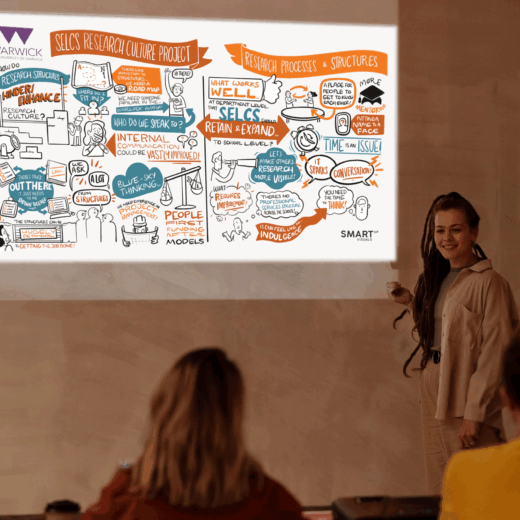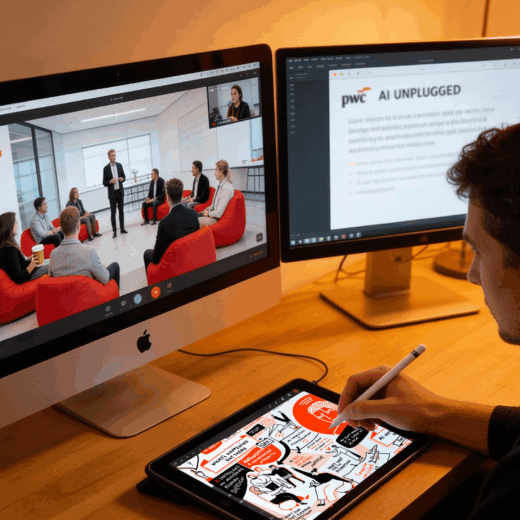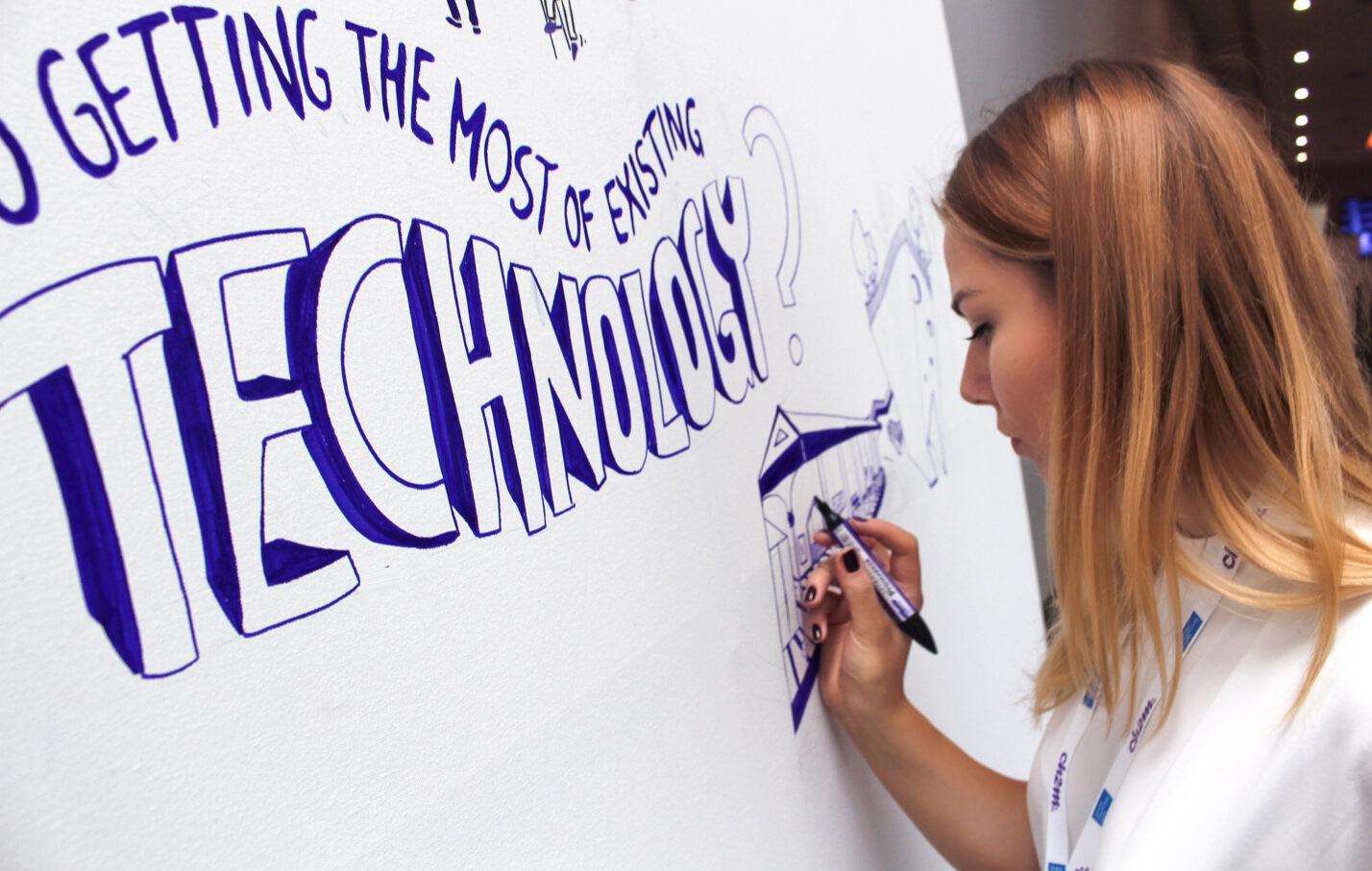
If you are planning an event and exploring ways to capture ideas visually, you have likely come across terms like live scribing, graphic recording, and live illustration.
They are often used interchangeably. And in most cases, they refer to the same or very similar services.
But there are important nuances in how they are used, and understanding them helps you choose the right approach for your event.
What is Live Scribing?
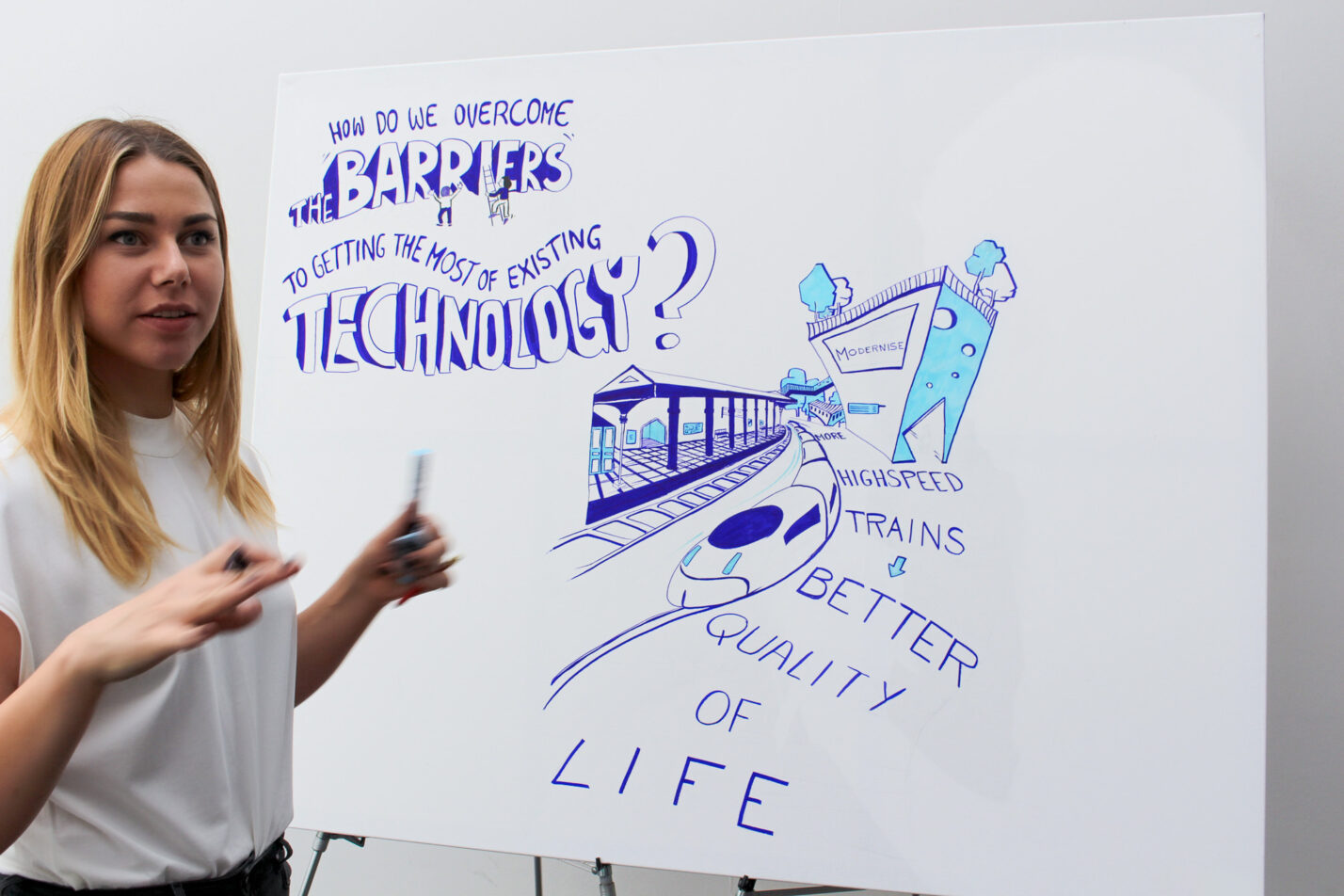
In live settings such as events, workshops, and meetings, live scribing provides real-time visual Live scribing is the process of capturing spoken ideas visually in real time.
At events, workshops, and meetings, a visual practitioner listens, distils key messages, and translates them into structured visuals as the conversation unfolds.
Live scribing works best when:
- clarity and shared understanding are essential
- ideas need to be captured as they evolve
- participants benefit from seeing connections in real time
- outputs will be reused after the event
Because the visuals develop alongside the discussion, live scribing helps people stay engaged, improves memory retention, and supports alignment across teams.
It is commonly used in leadership sessions, strategy workshops, conferences, and hybrid events where ideas need to land clearly and be remembered.
If you want to explore how this works across in-person, virtual, and hybrid formats, see our live scribing services.
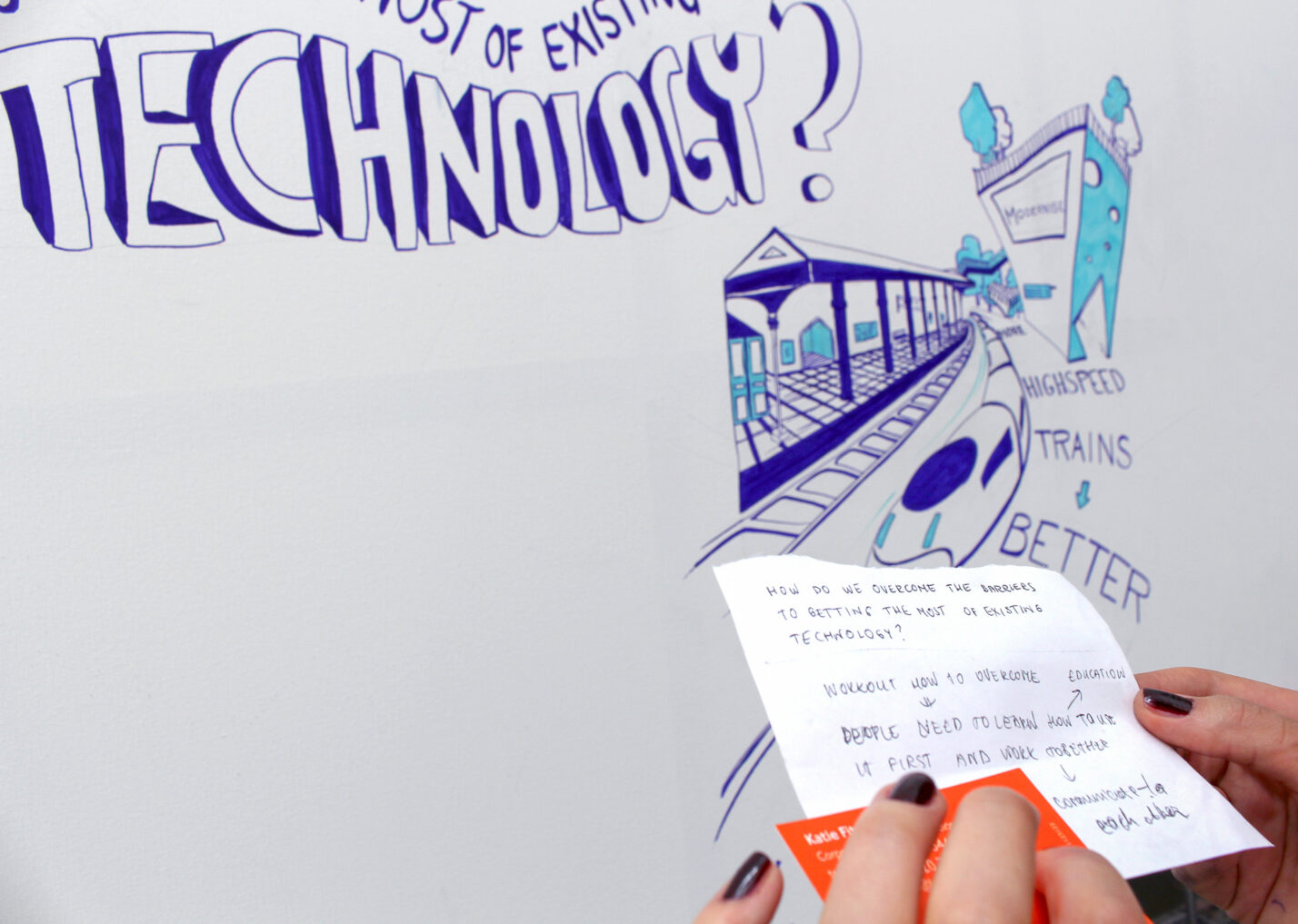
What is Graphic Recording?
Graphic recording is widely used as an alternative term for live scribing, especially in the US and parts of Europe.
In practice, it describes the same core activity: capturing ideas visually in real time during an event.
The differences are usually contextual rather than functional. The term graphic recording is often used when:
- documenting conference talks or panel discussions
- capturing content at a larger scale
- creating visual summaries for wider distribution
For many organisations, searching for a graphic recorder leads to the same outcome as hiring a live scribe.
The terminology may change. The core service does not.
What is Live Illustration?
Live illustration serves a different purpose.
Instead of focusing on clarity and structured thinking, it is more expressive and atmospheric. It is often used to:
- create visual interest and energy at events
- engage audiences in a more artistic way
- interpret themes rather than capture detailed content
Examples include live murals, brand illustrations, or artistic interpretations created during an event.
Live illustration is a strong choice when the goal is experience and engagement, rather than documenting ideas or decisions.
Which One Should You Choose?
The right approach depends on what you want your visuals to achieve.
Choose live scribing if your goal is to:
- capture complex discussions clearly
- support alignment and decision-making
- create outputs that remain useful after the event
Graphic recording works when:
- you are documenting talks or sessions
- you want a high-level visual overview
- your audience or region commonly uses this terminology
Finally, live illustration if:
- the focus is atmosphere and engagement
- visuals are expressive rather than structured
- the output is primarily experiential
In many cases, these approaches can complement each other. One captures the thinking. The other enhances the experience.
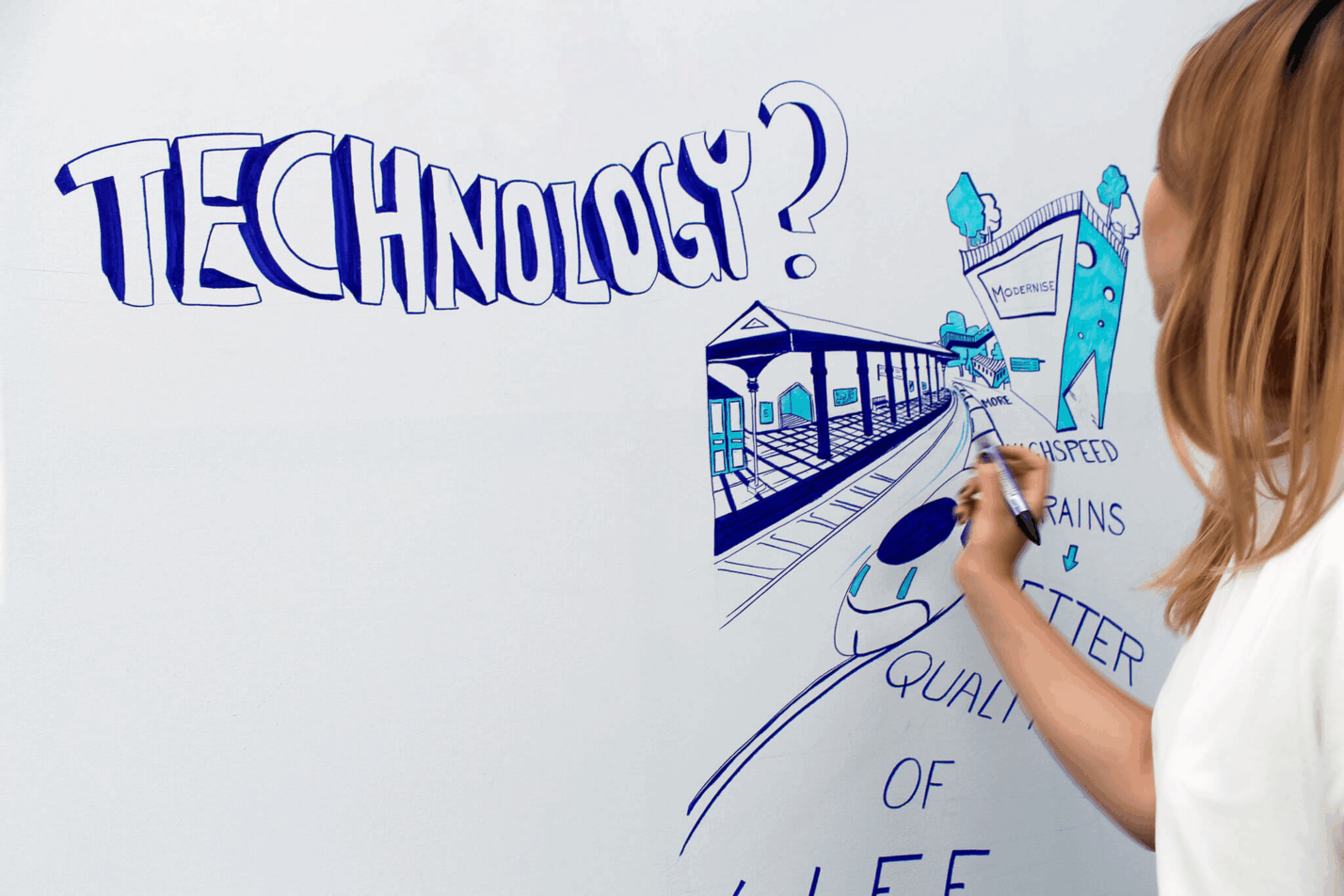
Why the Terminology Can Be Confusing for the Live Event Visualisation?
Many people use these terms interchangeably when searching for services.
This is completely normal.
Live scribing and graphic recording describe the same core practice. The difference is pretty simple. Language, region, or how the work is framed is usually what determines it.
Live illustration is a separate format. However, the term we use to describe live event illustration is often mixed with live scribing amd graphic recording at events.
What matters most is not the label, but the outcome you want to achieve.
In summary
These terms can sound different, but in practice they often overlap.
Live scribing and graphic recording describe the same core service. Both involve capturing ideas visually in real time during an event. The difference is usually in terminology, not in the outcome. Live illustration, while different in intent, is also sometimes used as a broader label depending on context.
So if you use terms like live scribing, graphic recording, or even live illustration when exploring options, you are not wrong.
What matters most is understanding what you want your visuals to do.
We help you define that clearly. Then we guide you towards the right approach for your event, audience, and goals.
If you would like to discuss your event, email us and we will help you choose the best route.
Knowing the difference helps you design events that are not only engaging in the moment, but also useful long after they finish.
Curious which visual format fits your next event?
Explore how live scribing supports conferences, workshops, and hybrid sessions.